Neutral Accent Wall Ideas
Neutral accent walls rely on texture, trim, plaster, or subtle tonal shifts instead of high contrast.
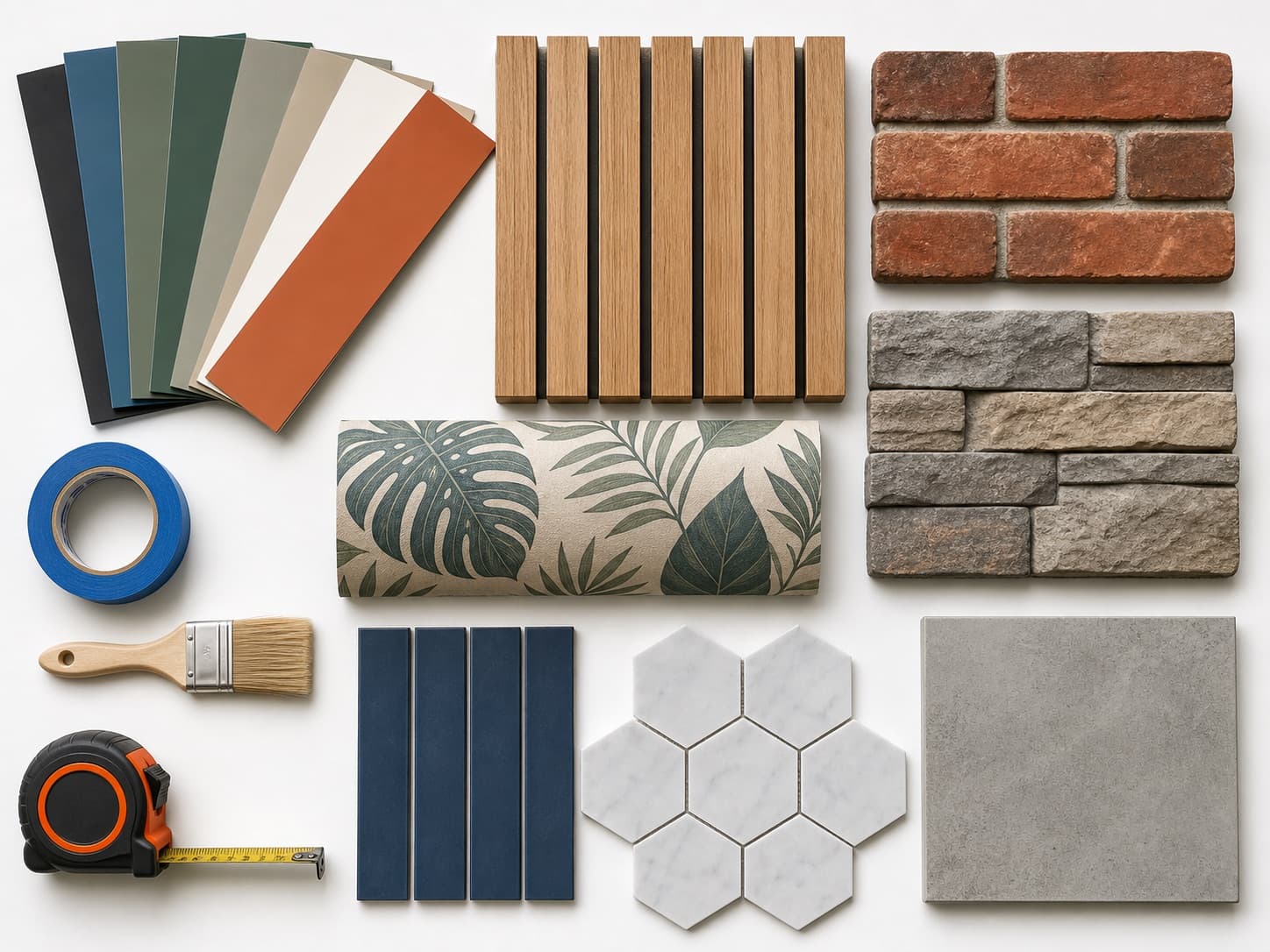
Neutral accent wall planning
A neutral accent wall cannot rely on colour contrast, so it has to earn its place through texture, sheen, or shadow instead. Limewash, textured plaster, tone-on-tone panelling, and timber battens all work as neutral features because they create their own light and shade. A neutral wall that is simply a slightly different beige from the walls beside it reads as a mistake rather than a decision.
Undertone discipline matters more here than anywhere else. Neutrals are defined by what is hiding underneath them — pink, yellow, green, or grey — and two neutrals with different undertones next to each other look dirty rather than layered. Sample against the trim colour, not against bare plaster.
Design decisions
- Limewash look
- Warm greige panels
- White oak slats
- Textured plaster
- Tone-on-tone trim
Mistakes to avoid
- Relying on a small tonal shift alone, which reads as a colour mismatch rather than a feature.
- Mixing neutrals with conflicting undertones on adjacent surfaces.
- Sampling against bare plaster or filler instead of against the finished trim colour.
- Choosing a flat finish with no texture, so the wall has nothing to distinguish it under any light.
Continue planning
Move from inspiration to a measured project plan before you buy paint, panels, wallpaper, or trim.