Paint Takeoff and Accent Wall Guide
Measure the wall, subtract openings, enter the selected paint's coverage and coats, and round the result to the container size you can actually buy.
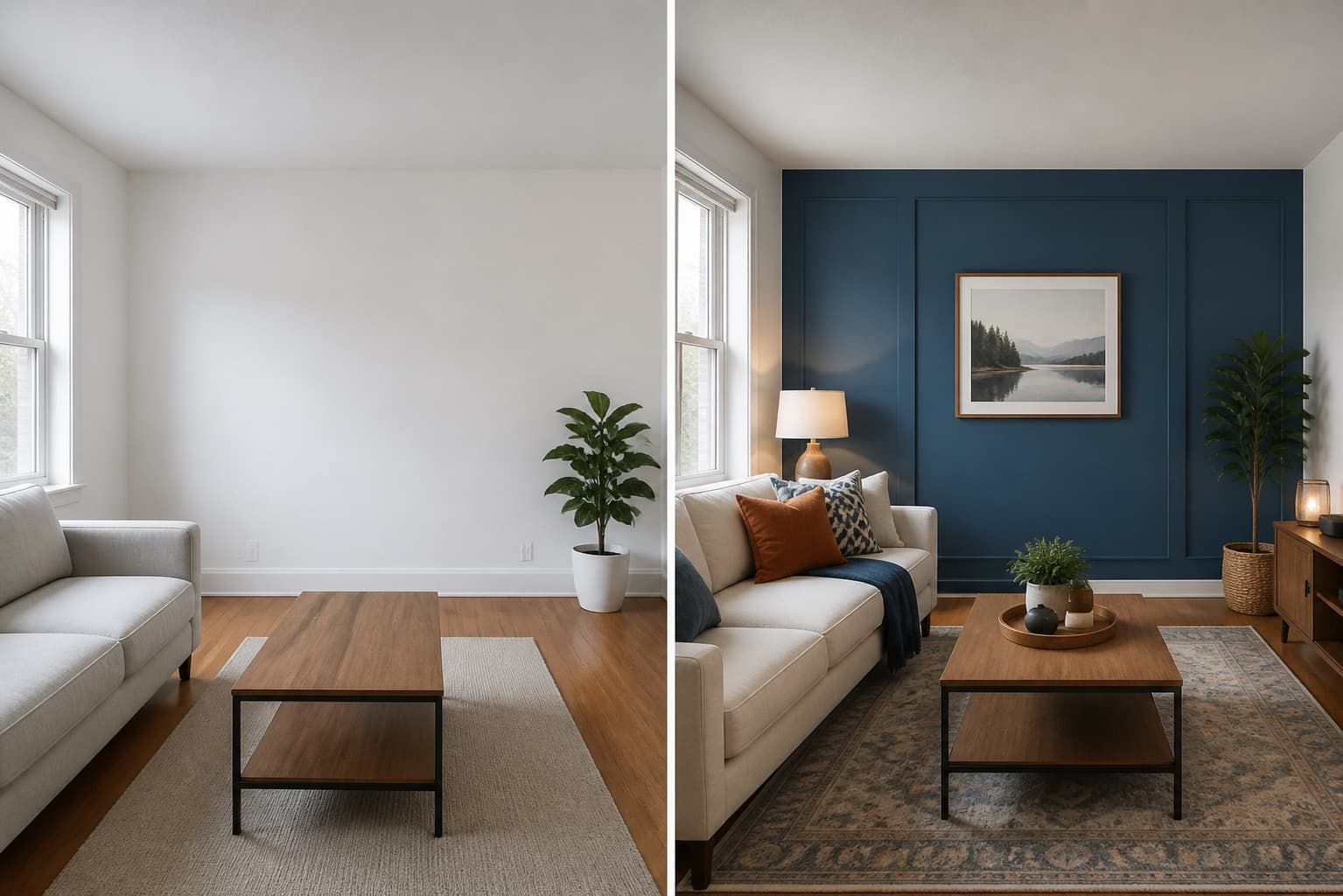
Paint accent wall planning
Paint is the only wall treatment where the quantity you need is fixed by a number printed on the tin rather than by the design. Spread rate, coat count, and container size decide how many containers leave the shop; wall size only sets the starting area. That is why a takeoff that hides those inputs behind a fixed 400 sq ft per gallon assumption will be wrong for textured plaster, bare drywall, a deep colour change, or any product with a published rate outside the common range.
Work in this order: measure the surface, subtract only the openings you can describe accurately, read the coverage and recommended coats off the product's technical data sheet, then round up to whole containers. Decide primer separately — it is a substrate question, not a paint-quantity question — and price the rounded quantity rather than the theoretical litres, because the shop will not sell you 1.53 gallons.
Design decisions
- Single-colour focal wall
- Painted trim or panel moulding
- Colour-blocked architectural zone
- Sample-led tonal contrast
- Low-commitment finish before material upgrades
Mistakes to avoid
- Using a generic coverage figure instead of the spread rate on the product you are actually buying.
- Calculating theoretical volume and forgetting that paint is sold in whole containers, so the real purchase is always rounded up.
- Assuming two coats. Deep colour changes over light walls, or light over dark, regularly need three.
- Subtracting every window and door on a wall you will still cut in around, which under-buys the paint you need for edges and touch-ups.
Continue planning
Move from inspiration to a measured project plan before you buy paint, panels, wallpaper, or trim.