Brick Accent Wall Ideas
Brick veneer adds loft character without needing a structural masonry wall.
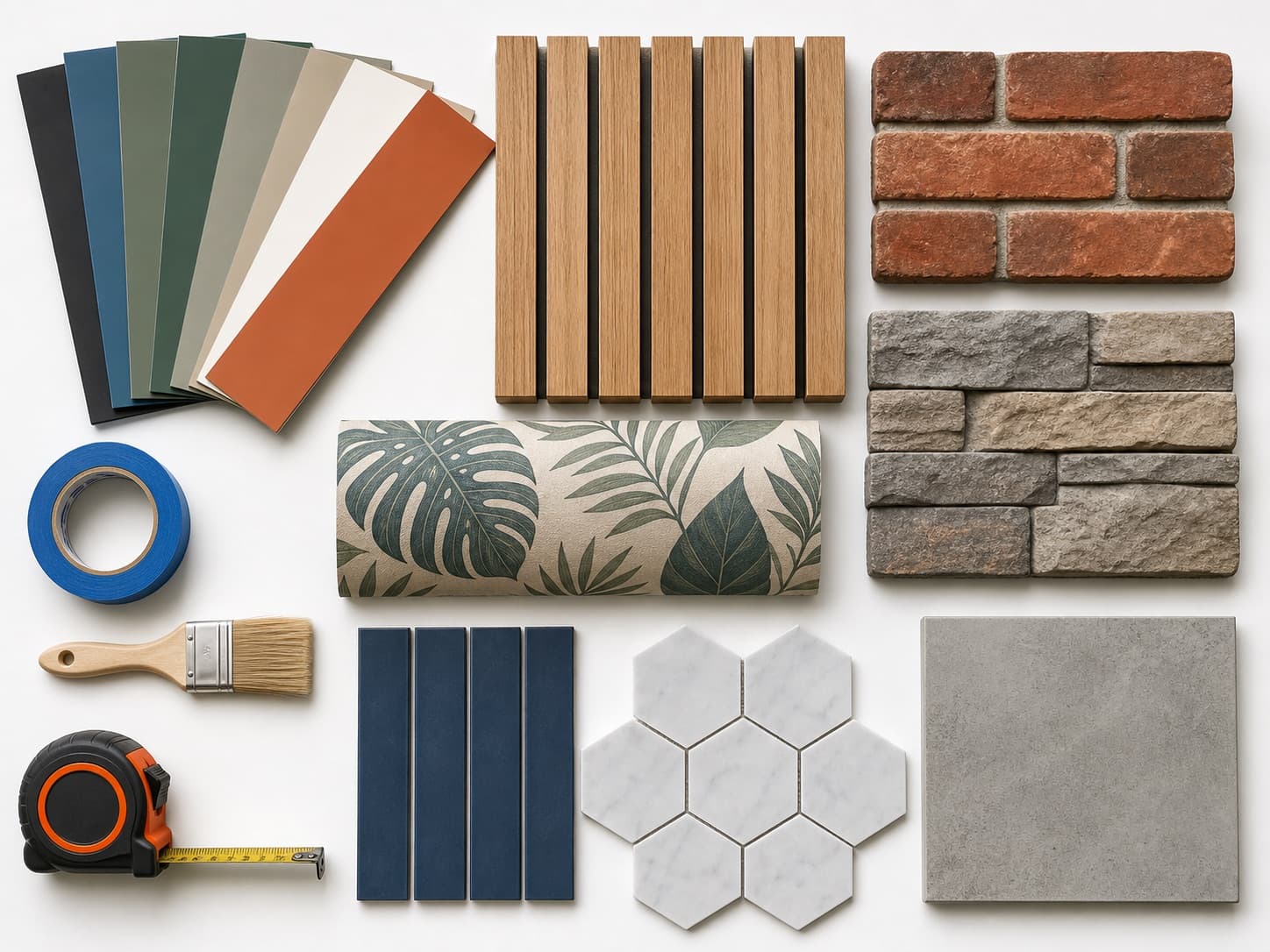
Brick accent wall planning
Brick slips give the loft-wall look without a structural masonry wall, and unlike full brick they can go on an internal partition. The visual difference between a convincing brick wall and an obviously fake one comes down to two things: colour variation across the wall and the quality of the mortar joint. Both are decided during installation, not at purchase.
Set out from a level base line rather than from the floor, which is rarely level, and mix slips from several packs as you go. The pointing is the step that most projects rush — a joint that is consistently raked back to the same depth is what makes the wall read as brick rather than as tiles pretending to be brick.
Design decisions
- Red brick veneer
- Whitewashed brick
- Kitchen nook brick
- Office backdrop
- Arched brick inset
Mistakes to avoid
- Setting the first course off the floor instead of off a level line, so the whole wall runs out of true.
- Laying from one pack at a time, which produces visible colour blocks.
- Varying the mortar joint width and depth across the wall.
- Leaving unsealed brick dust and efflorescence on the face after pointing.
Continue planning
Move from inspiration to a measured project plan before you buy paint, panels, wallpaper, or trim.