Wood Accent Wall Guide
Compare shiplap, reclaimed boards, plywood panels, and modern trim for warm architectural texture.
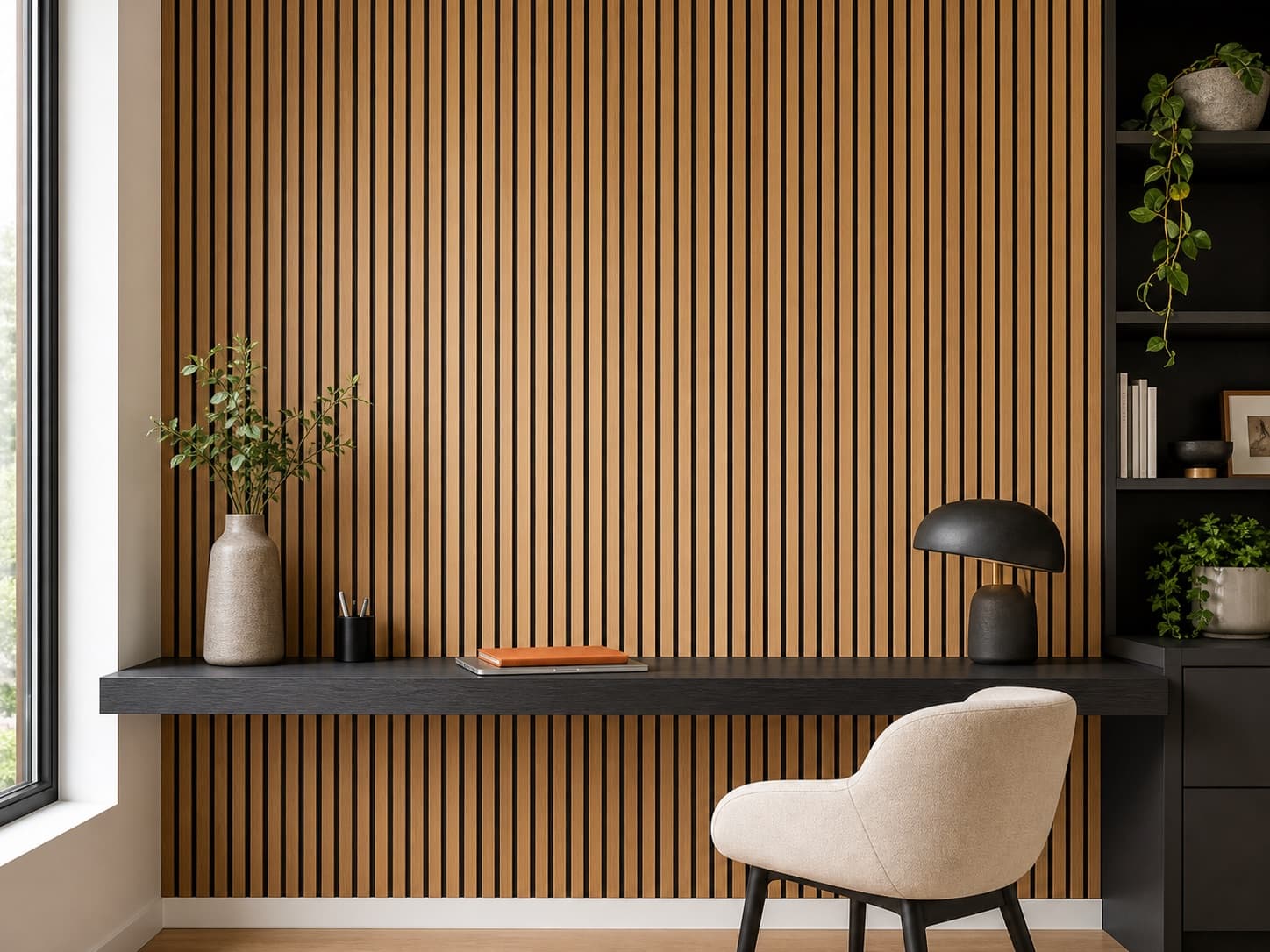
Wood accent wall planning
Wood is the accent-wall material with the widest cost and difficulty spread. The same visual family covers a sheet of grooved plywood fixed in an afternoon and a reclaimed board wall that needs sorting, denailing, and finishing before a single piece goes up. Decide which end of that range you are on before pricing, because the material cost is often the smaller half of the total.
Every timber wall shares two constraints. First, wood moves: boards brought in from a cold van will shrink after a week in a heated room, opening gaps at every joint, so let material acclimatise indoors before fixing. Second, fixings need something to bite — locate studs and mark them before you start, or plan a batten framework that gives you fixing points wherever you need them.
Design decisions
- Shiplap
- Reclaimed boards
- Oak panels
- Board and batten
- Plywood grid
Mistakes to avoid
- Fixing boards the day they arrive, before the timber has acclimatised to the room's humidity.
- Relying on adhesive alone on a wall that was painted with a soft or chalky emulsion.
- Starting from a corner instead of a plumb line, on the assumption that the corner is square.
- Finishing or staining after installation, which leaves unsealed edges and end grain in every joint.
Continue planning
Move from inspiration to a measured project plan before you buy paint, panels, wallpaper, or trim.