Stone Accent Wall Guide
Stone veneer brings durable texture for fireplaces, dining rooms, and small statement walls.
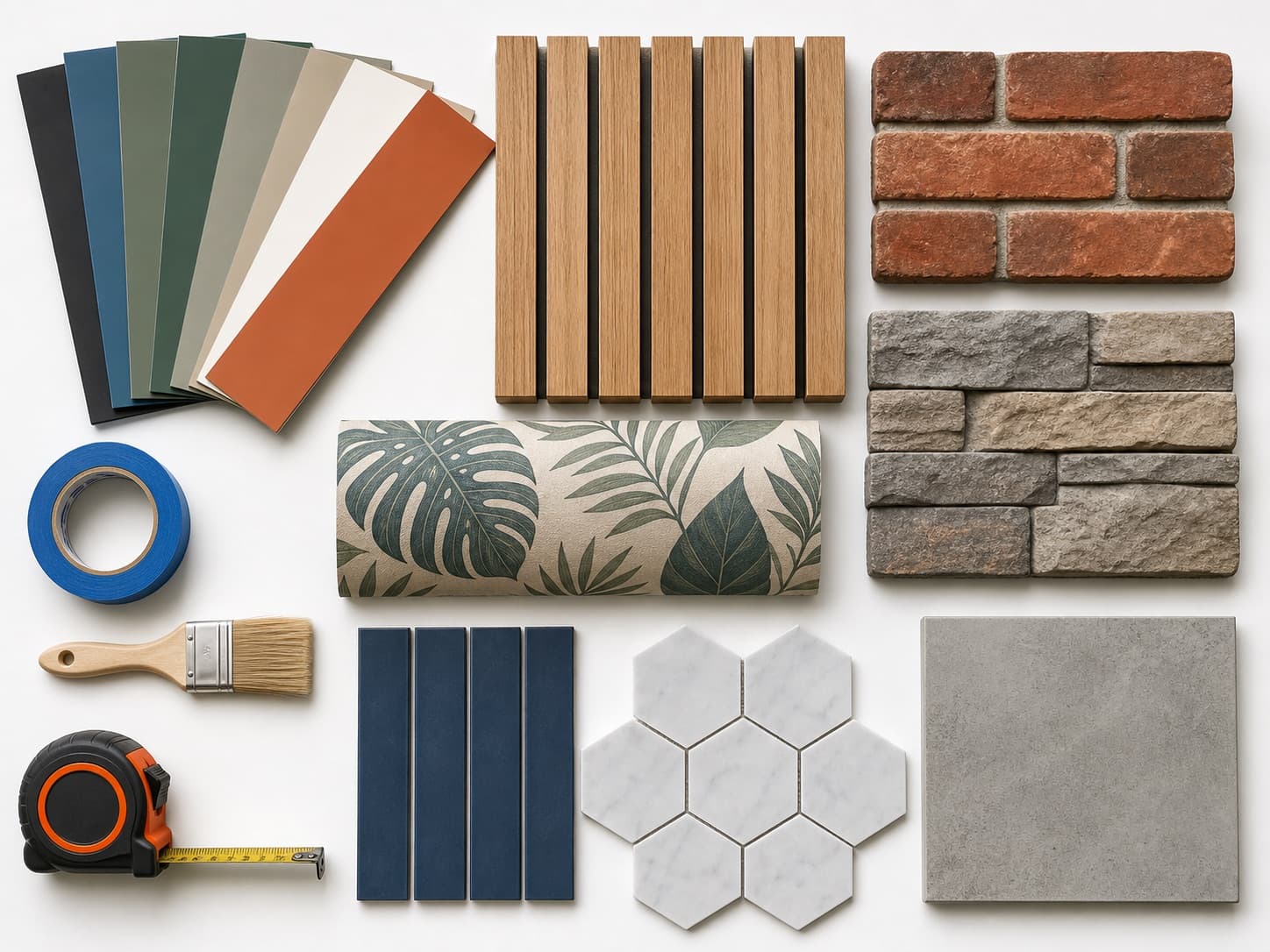
Stone accent wall planning
Stone veneer is the accent-wall material where the substrate does the deciding. Even thin veneer is heavy compared with timber or paper, and the wall behind it has to carry that load permanently. On plasterboard over studs this usually means a cement backer board and mechanical fixings rather than adhesive onto plaster — a detail that has to be settled before any stone is bought.
The second decision is pattern. Natural and cast veneers vary in colour from piece to piece, and the way to avoid an obviously repeating cast is to dry-lay several boxes mixed together on the floor before fixing anything. Working straight out of one box at a time is the fastest route to visible repeats and colour banding.
Design decisions
- Fireplace veneer
- Dining wall texture
- Limestone look
- Stacked stone
- Faux panels
Mistakes to avoid
- Fixing veneer directly to plasterboard without a backer board rated for the weight.
- Working from one box at a time, which produces visible colour bands across the wall.
- Using a general-purpose adhesive instead of the system the veneer manufacturer specifies.
- Leaving porous stone unsealed in a kitchen or bathroom, where it will stain.
Continue planning
Move from inspiration to a measured project plan before you buy paint, panels, wallpaper, or trim.